Open USD Launch Sends Circle Stock Down 17%
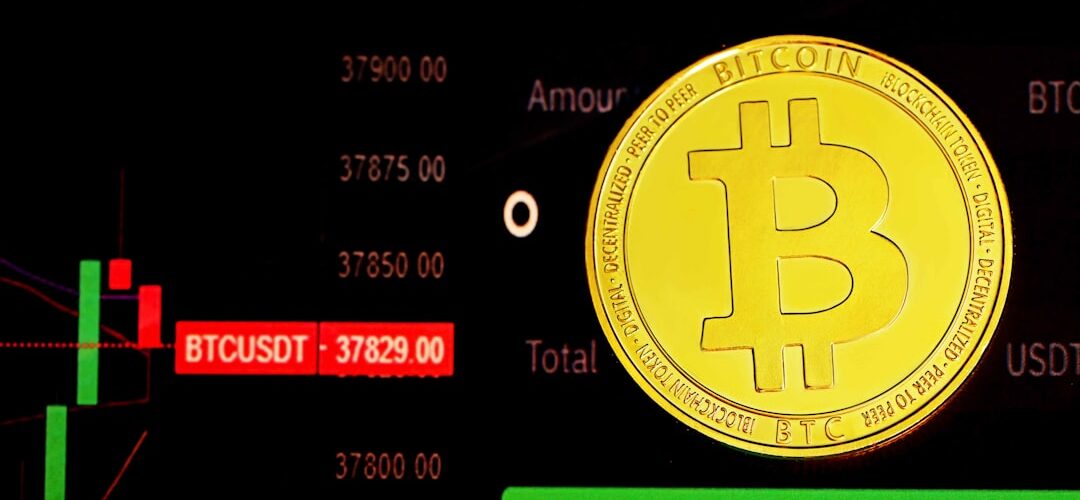
A 140-firm consortium unveiled Open USD on June 30, 2026, and Circle’s stock dropped 17.5% to $62.63 by the following day. That single price move tells you everything about what markets think is at stake: not just a new token, but a direct attack on the economic engine powering USDC.
What Open Standard Actually Built
Open Standard, led by Zach Abrams — co-founder of Bridge, the stablecoin infrastructure firm Stripe acquired in 2024 — announced Open USD (OUSD) as a dollar-pegged stablecoin with one core differentiator. Businesses that mint and redeem it pay no fees. More importantly, most of the interest earned on reserves flows back to consortium partners, with Open Standard retaining only a small management fee. That is the wedge. That is what spooked Circle investors.
The founding partner list spans nearly every corner of institutional finance. Payment networks: Visa, Mastercard, American Express, Discover. Banks: BNY, Standard Chartered, DBS, U.S. Bank. Technology: Google, Shopify, IBM. Crypto: Coinbase, Ripple, MetaMask, Aave, Bybit, OKX, Galaxy, Fireblocks, Anchorage Digital. BlackRock is in. Stripe is in. The consortium exceeds 140 companies at launch announcement. Circle, Tether, and PayPal are not members — a fact markets immediately interpreted as a competitive fault line.
Visa’s head of crypto, Cuy Sheffield, described Open USD as “a shared stablecoin designed for the global financial system.” Stripe President of Technology and Business Will Gaybrick said OUSD is intended to become the default stablecoin for businesses using Stripe. Those are not hedged endorsements. Those are product commitments from companies with enormous payment distribution.
Why Circle’s Business Model Is the Target
To understand why CRCL dropped 17.5% on this news, you need to understand what Circle actually sells. Circle earns revenue by parking USDC reserves — roughly $73.6 billion in circulation — into short-duration U.S. Treasuries and keeping the yield. That interest income is Circle’s primary profit engine. Open USD proposes to hand most of that yield to the companies routing transaction volume through the network instead of concentrating it at the issuer level.
The implications for Coinbase are equally uncomfortable. USDC-related revenue accounted for 44% of Coinbase’s subscription and services segment in the first quarter. Coinbase is simultaneously a founding Open USD partner and a USDC co-issuer that shares in Circle’s reserve income. That position is not sustainable indefinitely. If OUSD scales, Coinbase will face a choice about where to direct its distribution weight — and market participants noticed. Coinbase shares fell roughly 6% to $142.37 on the same session.
The incentive logic behind OUSD is straightforward and brutal. If a payment service provider, exchange, or fintech can earn reserve yield by routing flows to OUSD instead of USDC, and if risk feels comparable, many will switch. Brand loyalty matters less than revenue-sharing when you are running enterprise payment infrastructure at scale. This is the wholesale plumbing argument, and it is a legitimate one.
The Selloff: Overreaction or Accurate Pricing?
Analyst opinion split fast. William Blair reiterated an Outperform rating on CRCL and called the selloff a buying opportunity. Clear Street managing director Owen Lau told CoinDesk that Circle’s 16% single-day decline “went too far” and that he considers it an overreaction, pointing to Paxos’ Global Dollar Network (USDG) as a cautionary precedent — a consortium-backed, revenue-sharing stablecoin that has grown to only $3 billion in supply since launching in late 2024, against USDC’s $73 billion and USDT’s $145 billion.
Dragonfly general partner Rob Hadick offered a more balanced read. He acknowledged the partner list represents a genuine threat, particularly given Stripe’s broad financial product suite and its ability to “uniquely undercut Circle’s economics.” But Hadick also warned that building a working consortium is rarely clean. “Consortiums are hard and they break easily,” he said. “Incentives are broad and often misaligned.” He added that the road to scale for Open Standard will likely be harder than the launch announcement implies.
Noelle Acheson, author of the Crypto Is Macro Now newsletter, noted that Abrams “knows what he’s doing” but pointed out the announcement left critical questions unanswered: full ownership structure, licensing framework, which blockchains OUSD will deploy on at launch, and exactly how reserve income will be divided among 140-plus partners. OUSD is expected to go live later in 2026 on Solana, Stellar, Base, and Polygon — but that timeline is unconfirmed, and the token has not yet launched. Markets are pricing a threat before a product exists.
Who Wins, Who Loses, What Comes Next
The narrative benefit here flows to Open Standard, Stripe, and the consortium’s payment networks. They have turned a product announcement into a market-moving event without shipping a single transaction. That is impressive narrative leverage. The longer OUSD stays in pre-launch, the more that leverage leaks — but the announcement has already permanently changed how investors model Circle’s competitive position.
Circle loses on two fronts simultaneously. First, pure market psychology: once BlackRock, Visa, and Coinbase publicly back a competitor, the “most trusted stablecoin” positioning becomes a harder sell to institutional buyers evaluating long-term infrastructure decisions. Second, the economics argument is structurally valid even if OUSD underperforms. If distribution partners now believe a yield-sharing model is viable and that the regulatory environment under the GENIUS Act supports new entrants, Circle’s margins face compression regardless of whether OUSD hits $3 billion or $30 billion in supply. The ceiling on Circle’s revenue multiple just got shorter.
The GENIUS Act, which established a federal regulatory framework for payment stablecoins, matters here. As stablecoin policy has advanced across multiple jurisdictions through mid-2026, the regulatory runway has widened for exactly this kind of institutional consortium entry. Clear rules lower the barrier for large compliance-capable firms to issue or co-issue stablecoins. Open Standard’s founding members are precisely the firms that can clear those compliance hurdles fastest. That structural tailwind is real, and it favors the consortium over time.
Tether is, paradoxically, a secondary winner in the short term. OUSD explicitly targets USDC’s institutional positioning and Circle’s business model. Tether operates in different markets — crypto trading, developing economies — and its $145 billion supply does not depend on the same institutional distribution channels that OUSD aims to capture. Cointelegraph’s reporting on OUSD’s launch mechanics confirms the project frames itself as a competitor to both USDT and USDC, but the economic model targets Circle’s specific revenue structure more precisely.
The question the market hasn’t fully priced yet is this: even if OUSD launches and underwhelms, the announcement alone has permanently changed the negotiating power of Circle’s distribution partners. Every exchange, PSP, and wallet provider that touches USDC now knows a credible alternative with revenue-sharing terms is coming. That knowledge shifts every renegotiation Circle has over the next two years. The stock recovered some ground as analysts pushed back on the panic — but the structural damage to Circle’s pricing power in partner negotiations is not a sentiment issue. It is arithmetic. And arithmetic doesn’t overreact.