Bitcoin Whipsawed $2,000 in 24 Hours as Iran’s Hormuz Reversal Exposed Market Fragility
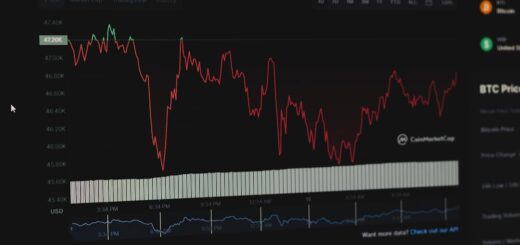
Bitcoin climbed to an intraday peak of $78,336 on April 17, 2026, after Iran’s Foreign Minister Seyed Abbas Araghchi declared the Strait of Hormuz open to commercial shipping, only to reverse to $76,091 within 24 hours when Iran reimposed military control over the waterway. The episode stripped away any illusion that this rally had fundamental legs. What traders got instead was a master class in how quickly a geopolitical narrative can be built and destroyed.
The Rally That Lasted Eighteen Hours
The sequence played out with almost surgical precision. Araghchi posted on X at 12:45 GMT on Friday that the passage for all commercial vessels through the Strait of Hormuz was “declared completely open for the remaining period of ceasefire.” Trump validated it on Truth Social, calling negotiations “mostly complete” and claiming Iran had agreed to an unlimited halt of its nuclear activities. Risk assets responded instantly. Brent crude fell 12.95% to $86.52, WTI dropped 14.26% to $81.19, and Bitcoin hit $78,336. Oil traders stripped the war premium they had spent weeks accumulating. Bitcoin traders piled in on the other side of that same bet.
What nobody priced adequately was how conditional the opening actually was. Vessels required authorization from Iran’s Ports and Maritime Organization and the IRGC. Transit lanes were Iranian-designated. The U.S. blockade on Iranian shipping remained fully intact. Only eight oil and gas tankers moved through the Strait during the entire window. The International Maritime Organization was unable to confirm the arrangement met freedom-of-navigation standards. This was not normalization. It was a controlled crack in a door that Iran still held.
Iran’s Speaker of Parliament, Mohammad Bagher Ghalibaf, made the underlying position explicit: “Whether the Strait is open or closed and the regulations governing it will be determined by the field, not by social media.” He went further, saying Trump had made seven claims in one hour, characterizing them as uniformly false. By Saturday, Iranian state media outlet Nour reported the strait had returned to “strict management and control by the armed forces,” citing the continued U.S. blockade of Iranian ports. Bitcoin dropped back to $76,091. As of this writing, it sits at $75,208, down 2.27% on the day.





The Short Squeeze Was Real. The Catalyst Was Not.
The mechanics of the Friday move are worth examining carefully, because they tell you a lot about market positioning rather than market conviction. Funding rates for bitcoin perpetual contracts had sat in negative territory for several weeks before the announcement, meaning short sellers were actively paying longs to hold bearish positions. That’s a compressed spring. The Hormuz announcement was the release. According to CoinGlass data, the market saw $762 million in total liquidations across 168,336 traders, with short positions accounting for $593 million of that figure. Bitcoin shorts specifically represented $381 million.
The Coinbase Premium Index hit its highest reading since October 2025, signaling genuine U.S. spot demand stepping into the move. Exchange volume reached $53.7 billion on Friday, up 32%. These are real numbers representing real money. But here’s what they actually describe: a technically overloaded short market that needed any excuse to unwind. The geopolitical narrative provided the excuse. The underlying conflict provided nothing durable. This distinction matters enormously when assessing whether $78K was a ceiling or a floor.
There is also the pre-announcement oil short to consider. According to Reuters and LSEG data, investors sold a combined 7,900 lots of Brent crude futures between 12:24 and 12:25 GMT, representing a $760 million short position placed twenty minutes before the Hormuz announcement went public. This was the third such instance in recent months. On March 23, a $500 million oil short appeared fifteen minutes before Trump delayed Iran strikes. On April 7, a $950 million short preceded the U.S.-Iran ceasefire announcement by hours. Someone keeps knowing things early. Markets function on information asymmetry, but this pattern is now documented and public, and it should make any honest analyst question how much of Friday’s “rally” was organic discovery and how much was manufactured exit liquidity.

Bitcoin tests $73,000 before April 23 as the April 22 ceasefire deadline passes without Strait normalization and Monday's legacy market open reprices the gap between Friday's optimism and the current operational reality.
Bitcoin did not test $73,000 before April 23; current market data shows Bitcoin at $79,100 as of April 27, 2026, indicating prices remained well above the $73,000 threshold throughout the period.
The Structural Flows Underneath the Noise
Strip out the Hormuz drama and something quietly significant was happening in the background. Spot Bitcoin ETFs attracted $996 million in net inflows across the week, their strongest performance since January, according to SoSoValue data. Friday alone brought $663.9 million in single-day flows. Combined net assets across all spot Bitcoin ETFs surpassed $101 billion, with daily trading volume approaching $4.8 billion. BlackRock’s iShares Bitcoin Trust accumulated $284 million on April 17 alone, part of an eight-day buying streak totalling $1.34 billion. Strategy Inc. added $2.6 billion in Bitcoin over two weeks. These are not short-squeeze flows. These are institutional allocation flows, and they were running before Iran said a word about shipping lanes.
Morgan Stanley’s recently launched Bitcoin Trust accumulated $120 million in assets within six trading days, already surpassing WisdomTree in that timeframe. Goldman Sachs filed for a Bitcoin ETF this week, its first direct entry into cryptocurrency investment products. Charles Schwab announced plans for spot crypto trading in 2026. The infrastructure story is being built in the background while everyone argues about geopolitics. As tracked in Goldman Sachs’s Bitcoin ETF filing, this wave of traditional finance entries represents a structural demand shift that operates on a different time horizon than a 24-hour Hormuz window.
Ethereum ETFs pulled in nearly $276 million for the week. Weekly altcoin performance was broadly positive: XRP led all major assets with a 6.4% advance, BNB gained 4.6%, Ether climbed 5.2%, and Bitcoin held a 4.7% weekly gain even after Saturday’s retreat. At time of writing, active addresses on the Bitcoin network stand at 439,552, hash rate sits at 1,031.3 EH/s, and there are 104,256 blocks remaining to the next halving. The network is not in distress. The price action is a sentiment problem, not a security problem.
Iran’s Bitcoin Ambiguity and What It Actually Signals
One overlooked layer in this story is Iran’s explicit designation of Bitcoin as an accepted payment method for oil tolls in the Strait, alongside Chinese yuan and U.S. dollar stablecoins. Sam Lyman, head of research at the Bitcoin Policy Institute, told Cointelegraph that Iran selected BTC specifically for its censorship-resistant and confiscation-resistant properties. However, Lyman noted there is “no onchain evidence” of any BTC toll payment so far, with the majority of Iran’s crypto transactions denominated in dollar stablecoins. As covered in detail in our report on Iran’s crypto toll framework at Hormuz, the practical adoption gap between policy and execution remains wide.
What this actually signals is more interesting than the headline suggests. A sanctioned state-level actor has formally identified Bitcoin’s core properties as strategically useful in a military and economic standoff. That is not a trivial endorsement. It does not move the price today. But it adds to a longer-term narrative around Bitcoin as neutral infrastructure in adversarial geopolitical contexts, a narrative that institutional analysts are already incorporating into their frameworks. The stablecoin dominance in Iran’s actual transactions tells you that execution practicality still lags ideological alignment. But the alignment itself is new and meaningful.
Four Days, One Ceasefire Deadline, and a Market That Front-Ran Everything
The April 22 ceasefire deadline is the operative pressure point now. CryptoSlate’s analysis of the countdown frames the arithmetic clearly: the Strait carries roughly 20% of global petroleum liquids and 84% of crude and condensate flowing to Asian markets. Since the conflict began, more than 500 million barrels of crude have been knocked out of the global supply chain, representing approximately $50 billion in lost output. As recently as April 7, EIA projected Brent averaging $115 in the second quarter. Morgan Stanley was modeling $110 Brent in Q2 and $100 in Q3 as recently as April 13. Brent currently sits at $86.52. The market has front-run a normalization that has not materialized in any operational sense.
Polymarket’s contract on Hormuz traffic returning to normal by April 30 collapsed to 28% Yes on Saturday after Iran reimposed restrictions and IRGC gunboats reportedly fired on at least one tanker and turned back more than 20 vessels attempting transit. The same contract had briefly hit 82% on Friday at the peak of optimism. That 54-percentage-point collapse in under 24 hours is the prediction market equivalent of the Bitcoin price action: fast in, faster out, with the underlying reality unchanged throughout.
Trump’s public posture and Iran’s public posture remain structurally incompatible. Trump has said the U.S. blockade on Iranian shipping will remain until Tehran reaches a deal including nuclear concessions. Iran’s foreign ministry rejected any transfer of enriched uranium to the United States and characterized Trump’s seven claims as a “media warfare” operation. These are not negotiating positions that are close to convergence. The diplomatic gap that exists on Sunday is not meaningfully smaller than the one that existed on Thursday.
Who Wins, Who Loses, and What Happens Before Friday
The clearest winners from this episode are the institutional buyers who were already accumulating below $77,000 before the Hormuz announcement gave them a price spike to evaluate. BlackRock did not buy $284 million of Bitcoin on Friday because of geopolitics. It bought because its allocation framework said to buy. The Hormuz rally simply gave late retail entrants an overpriced entry while providing disciplined institutional desks with a sentiment gauge. The losers are the $593 million in short positions that got liquidated on a narrative that reversed inside 18 hours, and the retail buyers who chased $78K on Friday afternoon and are now holding a 3.5% loss two days later.
The next critical variable is Sunday evening into Monday morning. Bitcoin trades continuously. U.S. equity futures, oil futures, and bond markets do not. When legacy markets reopen Sunday night, they will be pricing the same information that crypto markets have been absorbing all weekend: a closed Strait, a disputed diplomatic narrative, a ceasefire deadline four days out, and a prediction market that has already assigned a 72% probability to Hormuz remaining abnormal through April 30. If equity futures open lower Sunday night, Bitcoin will feel it first and hardest, with thinner weekend order books amplifying the move in whichever direction the tape breaks.
The structural ETF flows are a genuine counterweight. Nearly $1 billion in weekly ETF inflows is not noise. But flows follow price over short horizons, and if price deteriorates through the weekend, Monday’s flow data will tell a different story. The honest read is that Bitcoin’s underlying demand picture has improved materially over the past three weeks, but the Hormuz episode has left price sitting above where the actual fundamental situation justifies it. The short squeeze has already run. The geopolitical catalyst has already reversed. What’s left holding price up is institutional flow momentum, and that has to keep running at the same rate just to maintain current levels.
Markets are not irrational in the short run. They are rational about the wrong things. On Friday, the market was rational about what an open Strait of Hormuz would mean for global risk sentiment. It priced that scenario quickly and accurately. What it failed to account for was the probability that the opening lasted less than a day, that the diplomatic claims underpinning it were disputed within hours, and that the structural impediments to Strait normalization, U.S. blockade, mine threat, IRGC authorization requirements, have not moved. Bitcoin is not a geopolitical hedge. It is a liquidity sponge. When sentiment improves, it absorbs capital. When sentiment sours, it releases it. The Hormuz whipsaw did not change Bitcoin’s four-year cycle or its institutional adoption trajectory. It just reminded everyone, again, that the short-term price is mostly a function of what story people need to believe this week.