JPMorgan, Mastercard, Ripple and Ondo Complete First Cross-Border Tokenized Treasury Settlement on XRP Ledger
A cross-border tokenized U.S. Treasury redemption settled in under five seconds on May 6, 2026, marking the first time a public blockchain and global banking infrastructure completed such a transaction together in real time. The four institutions involved: JPMorgan, Mastercard, Ripple, and Ondo Finance, routed the redemption of Ondo’s OUSG fund across the XRP Ledger, Mastercard’s Multi-Token Network, and JPMorgan’s Kinexys platform, with U.S. dollars ultimately delivered to Ripple’s bank account in Singapore. That sub-five-second figure is not a benchmark to be cautious about — it is a proof point that changes the terms of the debate about whether public blockchains can carry institutional-grade financial workflows.
How the Transaction Actually Worked
The mechanics deserve careful attention, because the architecture here is deliberate and replicable. Ondo Finance processed the redemption of its OUSG tokens — representing short-term U.S. government Treasuries — on the XRP Ledger on behalf of Ripple. Mastercard’s Multi-Token Network then translated those on-chain settlement instructions into a format that Kinexys, JPMorgan’s blockchain payments platform, could act on within conventional banking channels. JPMorgan then pushed the corresponding U.S. dollars to Ripple’s Singapore account through traditional interbank rails.
The dollar leg did not move on-chain. That hybrid design is not a compromise or a limitation — it is the point. Institutions operating under existing regulatory frameworks cannot simply abandon fiat settlement infrastructure overnight, and this pilot did not ask them to. Instead, it demonstrated that blockchain can handle the asset layer while regulated banking handles the currency layer, with Mastercard’s network bridging the two in a single coordinated flow. Ripple described the result as institutions executing “cross-border transactions in a single integrated flow,” which is an accurate and important framing.
Who Benefits Most From This Architecture
The clearest winners here are institutional asset managers who hold or issue tokenized Treasuries and need to redeem them across jurisdictions without waiting for correspondent banking windows to open. Traditional Treasury settlement can take one to two business days and is constrained by time zones and banking hours. This pilot processed the same type of transaction outside those windows, in seconds, without requiring the counterparties to rebuild their compliance or custody infrastructure from scratch.
Ondo Finance benefits structurally. Its OUSG fund, which currently carries a 3.48% annual yield and holds roughly $610 million in total value locked, now has a demonstrated cross-border redemption path that no competing tokenized Treasury product has yet matched at this institutional scale. Ondo President Ian De Bode put it plainly: “This milestone represents the first time tokenized U.S. Treasuries have settled across borders and banks in near-real time and outside traditional banking windows.” That is a competitive differentiation that will attract qualified institutional buyers who have been sitting on the sidelines waiting for exactly this kind of infrastructure proof.
JPMorgan’s Kinexys is the other clear beneficiary. The platform has now processed more than $3 trillion in total transactions across its various deployments, and this pilot adds a genuinely novel use case: serving as the fiat settlement backbone for public blockchain redemptions. Kinexys head of commercial Zack Chestnut called the pilot “an important step towards establishing a framework for institutional-scale tokenized asset markets,” which understates what Kinexys gains — a defensible position as the preferred off-chain settlement layer for tokenized real-world assets as that market scales.
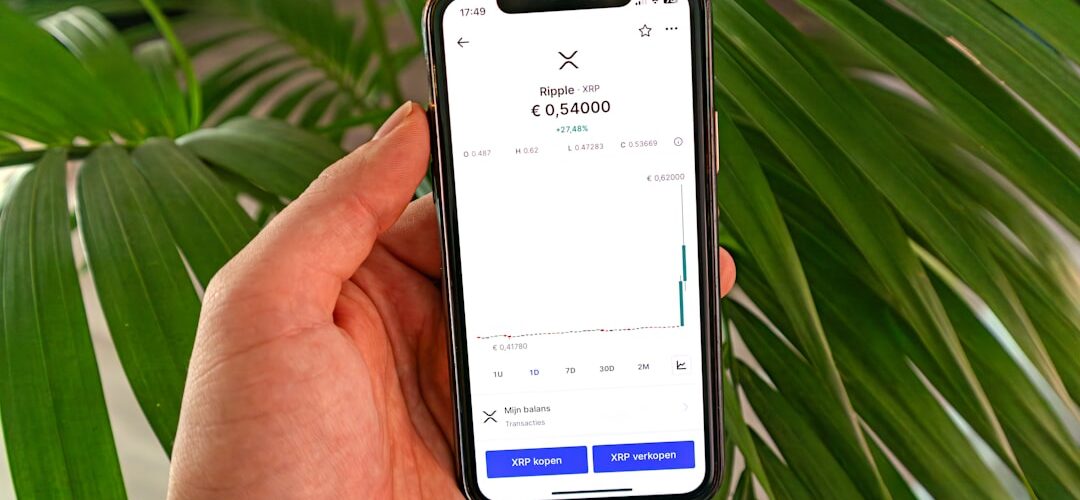
Ripple and the XRP Ledger occupy a more complex position. XRP was trading at $1.42, down 1.01% on the day at the time of reporting, which suggests the market absorbed the news without an immediate speculative spike. That is arguably a sign of maturation rather than indifference: institutional infrastructure milestones do not always move retail prices on the same trading day. The longer-term implication for the XRP Ledger is more substantial. By serving as the public blockchain layer in a workflow that also involves JPMorgan and Mastercard, XRPL has now demonstrated interoperability with two of the most systemically important financial institutions on the planet. As the RWA activity on the XRP Ledger has been building for months, this pilot is the most credible institutional validation of that trajectory to date.
The Tokenized Treasury Market as Context
Tokenized U.S. Treasuries represent roughly $15 billion in outstanding value according to RWA.xyz, against a $30 trillion underlying Treasury market. That ratio — about 0.05% — tells you both how early this is and how much room exists for expansion. The growth rate since 2024 has been sharp, and the infrastructure milestones are accelerating in parallel. The Depository Trust and Clearing Corporation announced this week that it will launch a tokenization service in October, with Treasury bills and bonds among the eligible assets. Nasdaq is preparing for tokenized stock and ETF trading. Intercontinental Exchange announced a 24/7 tokenization platform for equities in January. The institutional build-out is not theoretical at this point — it is scheduled.
Boston Consulting Group estimated in 2022 that tokenization could reach $16 trillion by 2030. McKinsey placed a more conservative ceiling of $2 trillion over the same period. The JPMorgan-Mastercard-Ripple-Ondo pilot does not resolve that forecasting gap, but it does shift the probability distribution toward the higher end by demonstrating that the cross-border settlement problem — one of the hardest technical and compliance challenges in the tokenization thesis — has a working solution today.
Regulatory Headwinds Remain Real
The IMF flagged in an April report that tokenization shifts risk from banking systems to shared ledgers and smart contract code, complicating intervention during stress events. The agency also warned that without legal clarity over ownership records and settlement finality, tokenized markets risk becoming “fragmented and peripheral.” These are not hypothetical concerns — they are structural gaps that pilot transactions cannot resolve on their own. Shark Tank investor and vocal crypto policy advocate Kevin O’Leary stated at Consensus Miami 2026 that significant capital will not be tokenized until U.S. market structure legislation passes and aligns with SEC rules. “When that occurs, it’s going to change everything,” he said.
O’Leary’s framing is correct on the dependency, but it understates how much the institutional pilots underway are creating facts on the ground that will shape the legislative outcome. Regulators do not write rules for hypothetical systems — they respond to live infrastructure. Every transaction like the one completed on May 6 narrows the policy options available to those who would prefer to treat blockchain settlement as a fringe concern. The regulatory timeline is uncertain, but the direction of travel is not.
What This Pilot Actually Proves — and What It Does Not
This was a pilot. One transaction, across four cooperating institutions, under controlled conditions. It does not prove that the XRP Ledger can handle the full throughput of global Treasury settlement, nor does it resolve the legal questions around cross-border settlement finality that the IMF identified. What it does prove is architectural: a public blockchain, a payment network, a Wall Street settlement platform, and a tokenized asset issuer can be composed into a single workflow that executes in under five seconds across jurisdictions. That is the hardest part of the design problem, and it has a working answer.
Markus Infanger, senior vice president of RippleX, framed the outcome precisely: the pilot shows that tokenized assets can move between public blockchains and global banking systems, and that institutions can treat that as a single integrated process rather than two separate systems requiring manual reconciliation. That framing matters because it redefines what interoperability means in practice. It is not a handshake between two isolated networks — it is a unified settlement workflow that happens to use different infrastructure layers for different functions. That is a more robust and more scalable model than any single-chain or single-institution approach could deliver on its own.
The build toward 24/7 global financial markets is happening with or without regulatory clarity, driven by institutions that have calculated the cost of inaction as higher than the cost of careful experimentation. This pilot is one more data point confirming that the public blockchain layer will be part of that future — and that the XRP Ledger has earned a seat at the table where that future is being designed.