Ripple Deploys Full Financial Stack in Brazil With XRP as Institutional Collateral
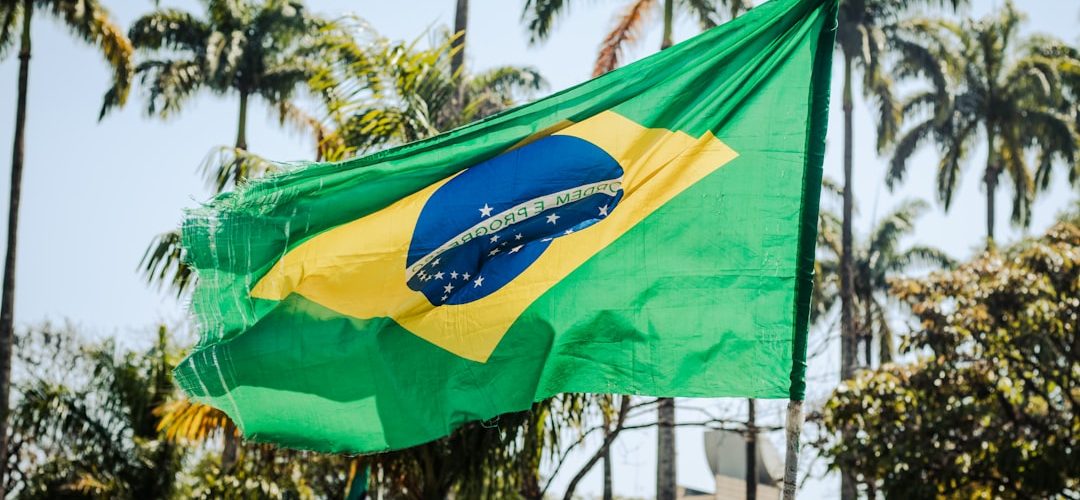
Ripple has launched a comprehensive institutional financial infrastructure in Brazil, covering custody, prime brokerage, treasury management, and stablecoin settlement under one integrated platform. The company has also applied for a Virtual Asset Service Provider license with the Central Bank of Brazil, signaling a calculated move to embed itself inside one of the world’s most sophisticated emerging financial markets. XRP, the network’s native asset, is now being used directly as collateral for institutional trades through Ripple Prime.
The Full Stack, Not Just a Product
Most companies enter a new market with a product. Ripple entered Brazil with an entire financial operating system. Payments. Custody. Prime brokerage. Stablecoins. Treasury management. All of it, packaged for regulated institutions, delivered at once.
That is a very different kind of story from a partnership announcement or a pilot program. Ripple is now positioned, at least structurally, as the only provider in Brazil capable of meeting institutional clients across the entire spectrum of financial services in digital assets. Whether the market accepts that positioning is a separate question. But the architecture is real, and the regulatory groundwork is being laid with genuine intent.
Ripple Custody launched in Brazil recently through a partnership with CRX. Ripple Payments has processed over $100 billion across 60-plus markets globally and is already live with Brazilian institutions including Banco Genial, Braza Bank, Nomad, and Azify. RLUSD, Ripple’s dollar-denominated stablecoin, is gaining traction among Brazilian exchanges and fintechs as institutional demand for a regulated digital dollar grows in the region.





XRP as Collateral: The Structural Shift Worth Watching
Here is where the narrative gets genuinely interesting, and where you need to separate the signal from the noise.
Ripple Prime CEO Mike Higgins confirmed in a recent interview that XRP is being actively used as collateral to finance institutional trades. This is not a whitepaper proposal. It is not a roadmap item. It is a live liquidity model integrating a volatile digital asset into the margin and settlement infrastructure of institutional finance.
That changes the conversation about XRP’s utility. For years, the debate has oscillated between token-as-speculation and token-as-bridge-currency. Collateral use is a third category entirely. It requires counterparties to trust the asset’s liquidity profile, its custody security, and its regulatory standing. All three of those conditions are now more favorable than they have ever been, following the resolution of Ripple’s long legal dispute with the SEC and the broader normalization of crypto within regulated finance.
XRP is currently trading at $1.53, up 0.47% over the past 24 hours. The asset recently reclaimed fourth place from BNB by market capitalization, a ranking shift that reflects genuine momentum rather than manufactured excitement. This Brazil announcement is part of a broader acceleration cycle that has been building for months, including a $750 million share buyback at a $50 billion private valuation and rising real-world asset tokenization volumes on the XRP Ledger.
Brazil Is Not an Accident
Markets choose their expansion targets for reasons. Brazil processes enormous cross-border payment volumes, has a large unbanked and underbanked population, and has developed one of the most progressive regulatory frameworks for digital assets in Latin America. Banco Central do Brasil has been notably active in pushing its Pix instant payment infrastructure and exploring tokenization rails. Ripple is not walking into a vacuum. It is inserting itself into an already active, competitive, and regulator-engaged market.
Ripple President Monica Long pointed to more than a decade of trust-building in regulated markets as the foundation for this move. That is the part that tends to get filtered out in the headlines. Regulatory licensing, institutional partnerships, and compliance infrastructure are slow, expensive, and unsexy to build. They are also very hard to replicate quickly. That is Ripple’s real moat in Brazil, not the technology alone.
The VASP application with the Central Bank of Brazil is pending. Until it is approved, Ripple’s ability to operate across every dimension of its proposed stack will remain partially constrained. Regulatory approvals in Brazil are not automatic, and the timeline is uncertain. That is a material risk that the bullish framing around this announcement tends to underweight.
Reading the Sentiment Correctly
The XRP community has a well-documented tendency to front-run regulatory and partnership narratives, pricing in outcomes before they materialize. This is not unique to XRP, but it is particularly pronounced in this ecosystem. The Brazil expansion is legitimate and strategically coherent. The collateral use case through Ripple Prime is genuinely novel at this institutional scale. But the gap between architecture and adoption is where most narratives quietly collapse.
Ripple’s global expansion strategy is consistent and methodical. The acquisition of BC Payments Australia to secure an AFSL follows an identical regulatory-first playbook. The pattern is clear. What remains to be tested is whether institutional clients in Brazil will actually consolidate their financial infrastructure around a single crypto-native provider, or whether they will continue to mix and match legacy and digital rails as they have always done.
The full financial stack is deployed. The license application is filed. The collateral model is live. Now comes the hard part: market adoption, regulatory approval, and the slow grind of proving that the architecture works under real institutional pressure. That is where most grand narratives meet reality. Watch that gap. It tells you more than any announcement ever will.