Coinbase’s Double Crisis: $394M Loss and AWS Outage Hit at Once
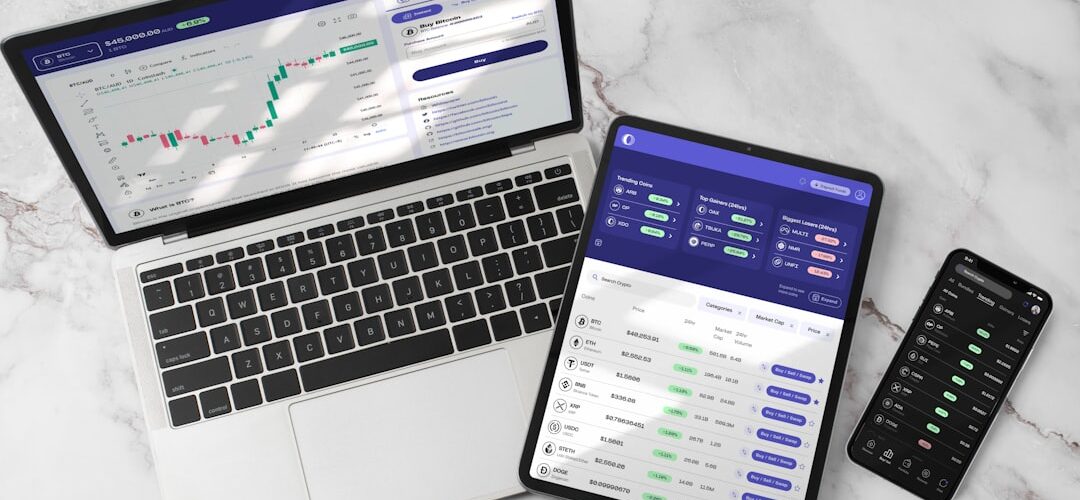
Coinbase posted a $394.1 million net loss in Q1 2026 and suffered a two-hour trading outage triggered by an AWS data center failure the following morning, delivering back-to-back shocks to investor confidence. The earnings miss was severe: Wall Street had projected a $0.27 profit per share; the company delivered a $1.49 loss per share instead. Taken together, the two events expose structural vulnerabilities that Coinbase must resolve if its infrastructure ambitions are to be taken seriously.
Earnings Collapse: Macro Pressure Meets Platform Dependence on Volatility
Total revenue for Q1 reached $1.41 billion, falling short of the consensus estimate of $1.52 billion and representing a 31% decline year-over-year. Transaction revenue bore the worst of it, dropping 40% to $755.8 million against analyst expectations of $805.2 million. Subscription and services revenue, the segment the market watches most closely as a proxy for Coinbase’s diversification progress, came in at $583.5 million — down 13.5% from a year earlier and below the $619.3 million estimate. This is Coinbase’s second consecutive quarterly loss: the company recorded a $667 million net loss in Q4 2025, compared with a $65.6 million profit in Q1 2025.
CFO Alesia Haas framed the quarter plainly on the earnings call: “Macro conditions were genuinely tough. Total crypto market cap and total crypto trading volume were both down more than 20% quarter-over-quarter.” Bitcoin fell from above $97,000 in January to roughly $63,000 in early February, and traded below $70,000 for much of the remainder of the quarter. A 12% March rebound was not enough to offset the earlier compression. Lower prices suppress volatility, and lower volatility suppresses retail trading frequency — a direct hit to Coinbase’s core revenue engine, as detailed financial breakdowns of the quarter confirm.
The company also recorded a $482 million unrealized loss on crypto assets held for investment, amplifying the headline figure beyond what trading revenue alone would have produced. Adjusted EBITDA came in at $303.3 million — positive for the 13th consecutive quarter, which is worth emphasizing — but down 46% sequentially. Shares fell more than 5% in after-hours trading Thursday, pushing COIN below $184, and the stock has now shed more than 14.5% year-to-date before this latest result.
The AWS Outage: Infrastructure Dependency Made Visible
Compounding the earnings damage, Coinbase experienced a service disruption exceeding two hours on the morning of May 8, stemming from an overheating event at an Amazon Web Services data center in Northern Virginia. The affected zone was use1-az4 within AWS’s US-EAST-1 region. AWS issued a status update at 5:11 am UTC acknowledging rising temperatures and stating: “We are observing early signs of recovery. We continue to work towards restoring temperatures to normal levels and bring impacted racks back online in the affected Availability Zone.” Additional cooling capacity was deployed to recover racks “in a controlled and safe manner.”
During the disruption, Coinbase placed its markets in “cancel only” mode, meaning traders could not execute new orders. Some users reported that no Bitcoin trades had occurred on Coinbase for over an hour, with the order book displaying prices hundreds of dollars above those on Binance and Hyperliquid. Coinbase confirmed via its support account that customer funds remained safe and directed users to monitor the AWS health dashboard — a response that, while technically accurate, offered little comfort to traders locked out of live markets. The exchange indicated trading would resume shortly once temperatures normalized, and Cointelegraph’s coverage confirmed FanDuel was among other affected platforms.
Technology analyst Gergely Orosz noted that the timing carried particular weight: the outage occurred days after CEO Brian Armstrong publicly highlighted non-engineering teams shipping code to production. Orosz characterized Coinbase’s AWS dependency as an intentional architectural decision rather than an oversight, describing it as a calculated tradeoff between operational simplicity and single-vendor exposure risk. That framing is accurate. Single-cloud architecture is common practice at this scale; the question is whether it remains acceptable for infrastructure that positions itself as the rails for global financial activity.
Strategic Diversification: Real Progress, Not Yet Sufficient
The results were not uniformly grim. Coinbase’s global crypto trading volume market share reached an all-time high of 8.6%, driven partly by derivatives growth. Trailing twelve-month derivatives volume climbed 169% year-over-year, with retail derivatives revenue surpassing a $200 million annualized run rate for the first time. The prediction markets division reached $100 million in annualized revenue within its first two months of U.S. operations. Stablecoin revenue rose 11% to $305 million, with USDC reaching $80 billion in market cap and average USDC held in Coinbase products hitting $19 billion — up 55% year-over-year. Subscription and services revenue now represents 44% of net revenue, a record proportion.
CEO Brian Armstrong told investors that Coinbase is evolving “from a primarily spot-focused crypto platform into a place where you can now trade any asset class,” including derivatives, commodities, futures, and prediction market contracts. He framed the current moment as “this interim period where spot crypto assets were down a bit, other asset classes were up,” arguing that diversification will smooth revenue over time. His assertion that “the world economy is moving on-chain, and Coinbase was built to capitalize on this transition” reflects a genuine strategic thesis, not a defensive posture. Base, Coinbase’s Layer 2 blockchain, processed 62% of global onchain stablecoin transaction volume during Q1 — a figure that underscores how much infrastructure value Coinbase has built beyond the trading interface most retail users see.
Earlier in the week, Coinbase announced plans to cut approximately 700 positions, roughly 14% of its workforce, as part of an AI-driven restructuring initiative. The company guided Q2 subscription and services revenue between $565 million and $645 million and flagged $50 million to $60 million in restructuring charges in the coming quarter. Bernstein, which reaffirmed a bullish rating in March, argued that the broad pullback in crypto equities represented an attractive entry point for investors seeking tokenization exposure — citing Coinbase and Robinhood as vehicles for that theme.
Who Loses, Who Gains, and What Comes Next
The immediate losers are clear: retail traders who were locked out of markets during the AWS outage, institutional participants who needed price certainty during the disruption, and short-term COIN holders who absorbed two consecutive quarters of net losses alongside a year-to-date decline exceeding 14.5%. Robinhood Markets, which similarly missed Q1 estimates with crypto revenue and trading volumes nearly halving year-over-year, confirms that this is a sector-wide trading revenue compression rather than a Coinbase-specific failure. That context matters for any fair assessment.
The beneficiaries of Coinbase’s difficulties are decentralized alternatives and competing centralized venues — particularly those with multi-cloud or distributed infrastructure that can point to genuine redundancy. The performance of platforms like Hyperliquid over recent months illustrates that traders will migrate to venues offering both uptime reliability and fee competitiveness when given reason to do so. Coinbase’s order book showing prices hundreds of dollars above Binance during the outage is exactly the kind of operational failure that accelerates that migration.
The path forward for Coinbase is structurally sound but operationally urgent. The derivatives momentum is real, the Base blockchain traction is real, and the stablecoin revenue growth is real. Armstrong’s vision of an onchain financial system is not wishful thinking — it is the most credible long-term thesis in regulated crypto infrastructure today. But a company that wants to be the settlement layer for global finance cannot remain dependent on a single cloud availability zone in Northern Virginia. The architectural question Orosz raised is not a technical footnote; it is the central trust question for any exchange that aspires to be critical infrastructure. Coinbase has the strategic direction right. The execution layer needs to catch up.